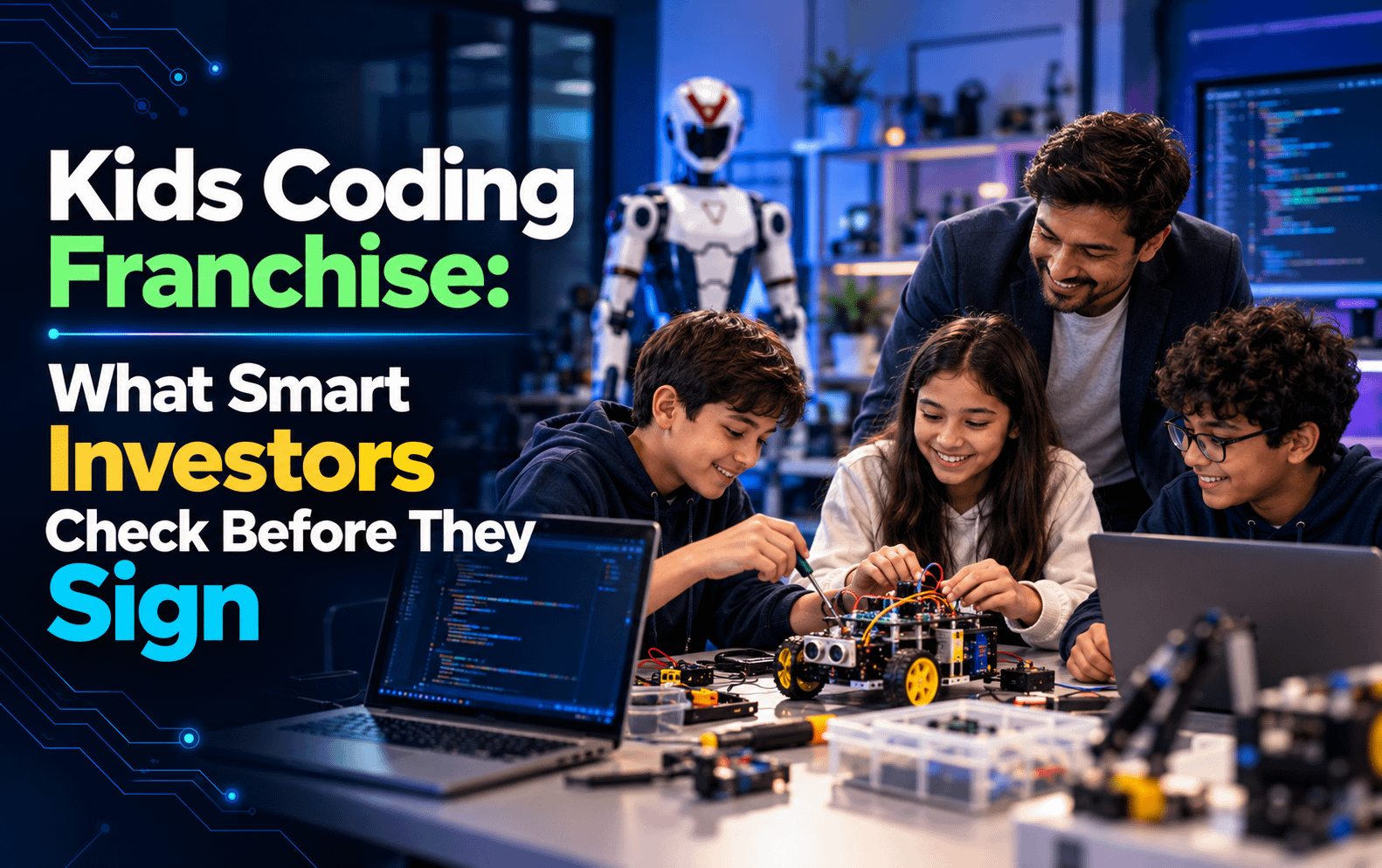
A kids coding franchise looks simple from the outside. You rent a space, hire teachers, and enroll children. In practice, the gap between a thriving school and a struggling one is wide. Some owners fill their classrooms within months. Others spend a year wondering why parents visit once and never return.
This guide shows what separates the two. You will see what the business really sells, which checks matter before you sign, and how different kinds of owners can succeed. The aim is simple. You should finish reading with a clearer head and a sharper list of questions.
Why Families Now Pay for Coding Skills
Not long ago, most parents saw coding as a hobby for a few tech-loving teenagers. That view has changed. Children now grow up surrounded by apps, smart speakers, and AI tools. Many parents want their child to understand how those tools work, not just tap on them.
Think about swimming lessons. Nobody expects every child to become an Olympic swimmer. Families still pay for lessons because the skill is useful and builds confidence in the water. Coding is following the same path. Only a few students will become software engineers. Nearly all of them will use technology every single day.
Busy school days play a part too. Timetables are full, and hands-on projects often get squeezed out. Parents start searching for a place where their child can build, test, and make mistakes without pressure. A well-run kids coding franchise fills that gap close to home.
What a Kids Coding Franchise Really Sells
Here is a surprise for first-time investors. Parents are not buying code. They are buying results they can see at home.
Confidence
Picture a nine-year-old who spends her weekends on a tablet game. After eight weeks of classes, she builds a small game of her own and shows it to her grandparents. Her parents will forget the lesson plan. They will remember her face. Moments like that bring families back, term after term.
Structure
Many children play for hours but never finish a project. A good program gives them steps, deadlines, and a finished result. A twelve-year-old who learns to plan, build, and fix a project gains a habit that helps in math, writing, and everyday life.
Proof
Parents love evidence. Showcase days, project galleries, and short progress notes turn a vague idea like “learning to code” into something they can hold. Visible wins are also easy to share with friends and relatives, and that matters more than most new owners expect.
Five Checks Before You Choose a Kids Coding Franchise
Every brand will tell you its model is special. Use these five checks to look past the pitch.
1. A Curriculum That Grows With the Child
Ask to see the full learning path, not just the first class. A seven-year-old might begin with block-based tools such as Scratch. A thirteen-year-old should be ready for Python, robotics, or AI projects. If the path stops after one year, families drift away. If it keeps stretching, students stay curious. Also ask how often the content gets refreshed. Technology moves fast, and old lessons age quickly.
2. Training and Support for the Owner
Your first ninety days decide a lot. Ask what the franchisor teaches before launch. Look for help with hiring teachers, running trial classes, and talking with parents. Then ask what support continues after opening. A phone number is not support. A dedicated team that answers real questions is.
3. A Smart Location Plan
Rent is only one part of a good location. Imagine two spaces. The first sits in a cheap industrial park. The second sits in a plaza near two schools, a grocery store, and a busy pickup route. A parent with a tight 5 p.m. schedule will choose the second one nearly every time. Ask the franchisor how they study a territory, and whether they help you read local family data.
4. A Clear Revenue Model
A strong kids coding franchise rarely leans on one income stream. Look for monthly tuition, school-break camps, weekend workshops, birthday parties, and school partnerships. Each stream fills a different part of the calendar. Request the franchise disclosure document and read its financial sections slowly. Then speak with current owners about their real experience.
5. A Brand That Keeps Moving Forward
A growing brand attracts attention, but you want the right kind of growth. Check whether new campuses open steadily and whether older ones stay open. Look at how the franchisor handles fresh topics such as AI and robotics. A brand that adapts keeps its programs relevant to families.
Three Owner Profiles That Often Fit This Model
The profiles below are illustrations, not named owners. They show how different backgrounds can match the business.
The Former Teacher
She spent twelve years in a classroom and still loves watching a child solve a problem. She already knows how to manage a room and talk with parents. What she needs is help with marketing and sales. A franchise with ready-made campaigns lets her focus on what she does best.
The IT Professional
He understands the product from day one. He can speak with confidence about Python and robotics. The harder part is building a local community through school visits and neighborhood events. A franchise playbook for outreach fills that gap.
The Parent-Investor Couple
One partner handles operations, hiring, and schedules. The other leads outreach, events, and parent relationships. Both care about children in their own town. Their personal story becomes a warm and believable part of the brand.
What a Typical Week Can Look Like
Every owner runs things differently. Still, a common rhythm helps you picture the work.
- Monday: review the class schedule, confirm teacher readiness, and follow up with trial-class families.
- Tuesday to Thursday: after-school classes run. The owner greets parents, answers questions, and watches teaching quality.
- Friday: visit a nearby school or community group, or plan an upcoming camp.
- Saturday: host workshops, demo sessions, or a birthday party.
- Sunday: review enrollment numbers and map out the week ahead.
Some owners hire a center manager as the school grows. Others stay hands-on. Ask the franchisor which path owners usually take and what each path demands.
Honest Risks of a Kids Coding Franchise
No business is risk-free, and a trustworthy franchisor will say so. Here are the main ones.
- Slow starts: enrollment takes time to build, so plan your cash reserves with care.
- Staffing: good teachers are hard to find and harder to keep.
- Seasons: exam periods and summer travel can thin out attendance.
- Free alternatives: online tutorials cost nothing, so your center must offer what a video cannot, such as live guidance, friendship, and accountability.
None of these risks is a deal breaker. They are simply the items to plan for before day one.
Questions to Ask on Discovery Day
A discovery call is your chance to test the brand. Bring this list.
- What does a new owner do during the first ninety days?
- How many campuses have opened, and how many have closed?
- Can I speak with several current owners, including newer ones?
- How is the curriculum updated, and who writes it?
- What marketing support comes before and after opening?
- Which costs happen once, and which repeat every month?
- How do you choose and approve a territory?
- What does a slow month look like, and what help follows?
Where iCode Fits
As a kids coding franchise, iCode teaches coding, robotics, and AI to children and teens through a growing network of campuses across the United States. Its mentors are teachers first. They guide each student step by step, and technology supports their work. Select campuses also offer humanoid robotics, which gives older students a close look at how AI meets hardware.
The brand has earned outside recognition too. iCode appeared on the Inc. 5000 list, ranking No. 1,301 overall and No. 26 among education companies, with 399% growth over three years. A ranking is not a promise of your results. It does show a brand with real momentum.
Your Next Step
Picking a kids coding franchise is a big decision, so take it in stages. Start by reading the disclosure document. Then speak with current owners and, if you can, visit a campus. Sit at the back of a class. Notice how students react when a stubborn project finally works.
When you feel ready, explore the opportunity at icodefranchise.com and request more details. A conversation costs nothing, and the right questions can save you months of guesswork.
Frequently Asked Questions
How much does a kids coding franchise cost?
Costs vary by brand and by territory. The franchise disclosure document lists the estimated initial investment, so request it early. Compare that figure with your own savings, financing plans, and the cash reserves you want for the first year.
Do I need a tech background to own one?
No. The owner runs the business, and trained teachers lead the classes. Many owners come from teaching, sales, or operations. What matters most is a willingness to follow the system and to connect with local families.
How long does it take to reach break-even?
The answer depends on location, marketing effort, and how quickly families enroll. Ask the franchisor whether the disclosure document includes financial performance data. Then confirm the numbers by talking with current owners.
Which age groups do these programs serve?
Most programs start in the early school years and continue through high school. Ask for the exact age ranges and the level of each course, so you can see how a student moves forward over time.
Can I run the center alongside a full-time job?
Some owners begin part time, but the launch phase needs hands-on attention. A capable center manager can help later. Ask the franchisor how current owners handled the first six months.
Why choose a franchise instead of starting my own coding school?
A franchise gives you a brand, a tested curriculum, training, and shared systems from the start. Building those pieces alone takes time and money. The trade-off is that you follow a framework and pay ongoing fees.
Yoast SEO Details (not for publishing)
| Field | Value |
| Focus keyphrase | kids coding franchise |
| Meta title | Kids Coding Franchise: What Investors Should Check First |
| Meta description | Thinking about a kids coding franchise? See what to check, which questions to ask, and how iCode supports first-time owners. |
| Social title | Kids Coding Franchise: 5 Checks Before You Sign |
| Social description | Learn what parents really buy, which risks to plan for, and the questions to ask before you invest in a children’s coding school. |
| Slug | kids-coding-franchise-guide |
| Featured image alt text | Students building a robot together in an iCode classroom, with a mentor guiding the project |