In late 2023, Amazon began quietly testing a bipedal robot named Digit inside a handful of its US warehouses. By 2026, the company backing that robot, Agility Robotics, had opened RoboFab — a dedicated factory in Salem, Oregon built to produce more than 10,000 humanoid robots a year. That’s not a research demo anymore. That’s a supply chain.
For STEM franchise investors, moments like this matter for a simple reason: when a technology moves from “interesting experiment” to “something a major employer is scaling production for,” parents notice, and they start asking where their kids can actually learn it. That shift is exactly what’s turning humanoid robotics into one of the more interesting trends in STEM education franchising heading into 2026.
What’s Actually Driving the Humanoid Robotics Boom
This isn’t a slow-burn trend. According to a July 2026 report from MarketsandMarkets, the global humanoid robot market is projected to grow from roughly $5.41 billion in 2026 to $50.27 billion by 2035 — a compound annual growth rate above 28%. Multiple other market research firms have published even steeper short-term growth curves for the same category.
A few forces are converging at once: persistent labor shortages in warehousing and caregiving, rapid progress in the “embodied AI” that lets robots learn from human demonstration rather than hand-coded instructions, and falling sensor and actuator costs that make a capable humanoid platform cheaper to build than it was even two years ago. None of those forces are temporary — they’re structural, which is part of why this trend has staying power.
A Real-World Example: Amazon’s Bet on Humanoid Robots
Amazon’s Digit pilot is a useful example precisely because it’s unglamorous. The robot isn’t performing tricks — it’s moving empty totes off conveyor lines, a repetitive task nobody particularly wants. That’s the tell that a technology has moved past the demo stage: it’s being trusted with boring, real work, at scale, by a company with no incentive to overstate its readiness.
That kind of quiet, practical adoption tends to be a stronger signal for long-term demand than a flashy product launch — and it’s the kind of shift that eventually reaches classrooms and after-school programs, because parents want their kids prepared for the working world that’s actually forming around them.
Amazon isn’t alone, either. Automakers, logistics companies, and even hospitals are running their own humanoid robot pilots right now — a pattern that looks less like an isolated experiment and more like an entire sector quietly repositioning around the same technology at the same time.
Why This Trend Matters to STEM Franchise Investors
A market forecast on its own doesn’t fill enrollment seats. What actually matters for a franchise investor is whether that broader trend is changing what parents are asking for — and on that front, the shift is already visible on the ground.
Parents Are Already Asking About Robotics
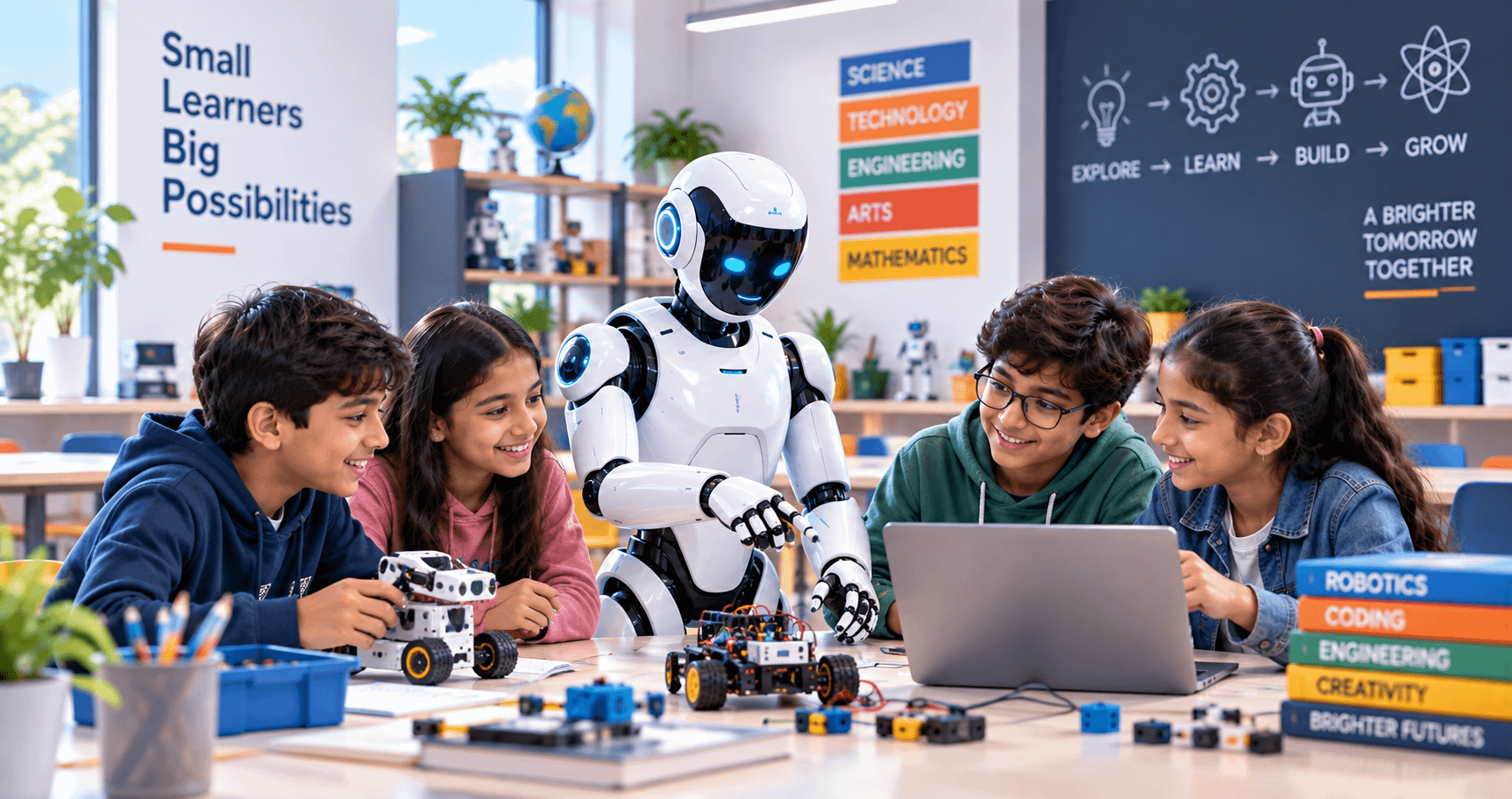
STEM program directors report a steady rise in the number of parents specifically asking about robotics, not just “coding” in the generic sense. Coding is now the expected baseline; robotics with a physical, moving platform is increasingly the differentiator parents are shopping for.
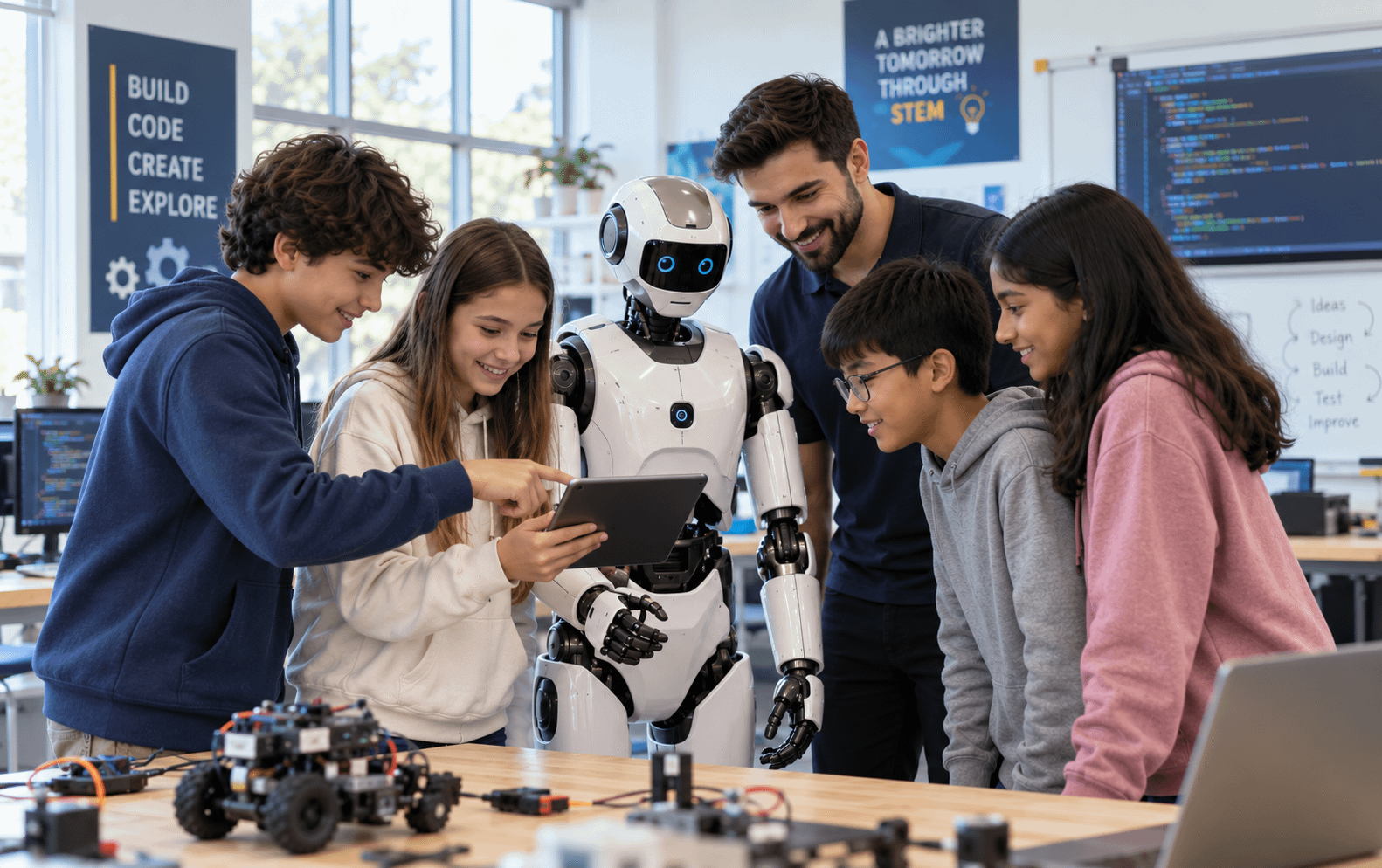
That shift shows up in a very ordinary way: a parent walks past a demo table at a school event, sees a robot actually move in response to a student’s code, and asks where they can sign up — a reaction a slide of Python syntax rarely produces on its own.
Early Exposure Is Becoming a Selling Point
- Parents want their kids comfortable around real robotics platforms, not just simulations
- Schools increasingly expect incoming students to have some hands-on STEM exposure
- A visible, physical robot is easier to market and demo than an abstract coding curriculum
How iCode Turns This Trend Into a Franchise Advantage
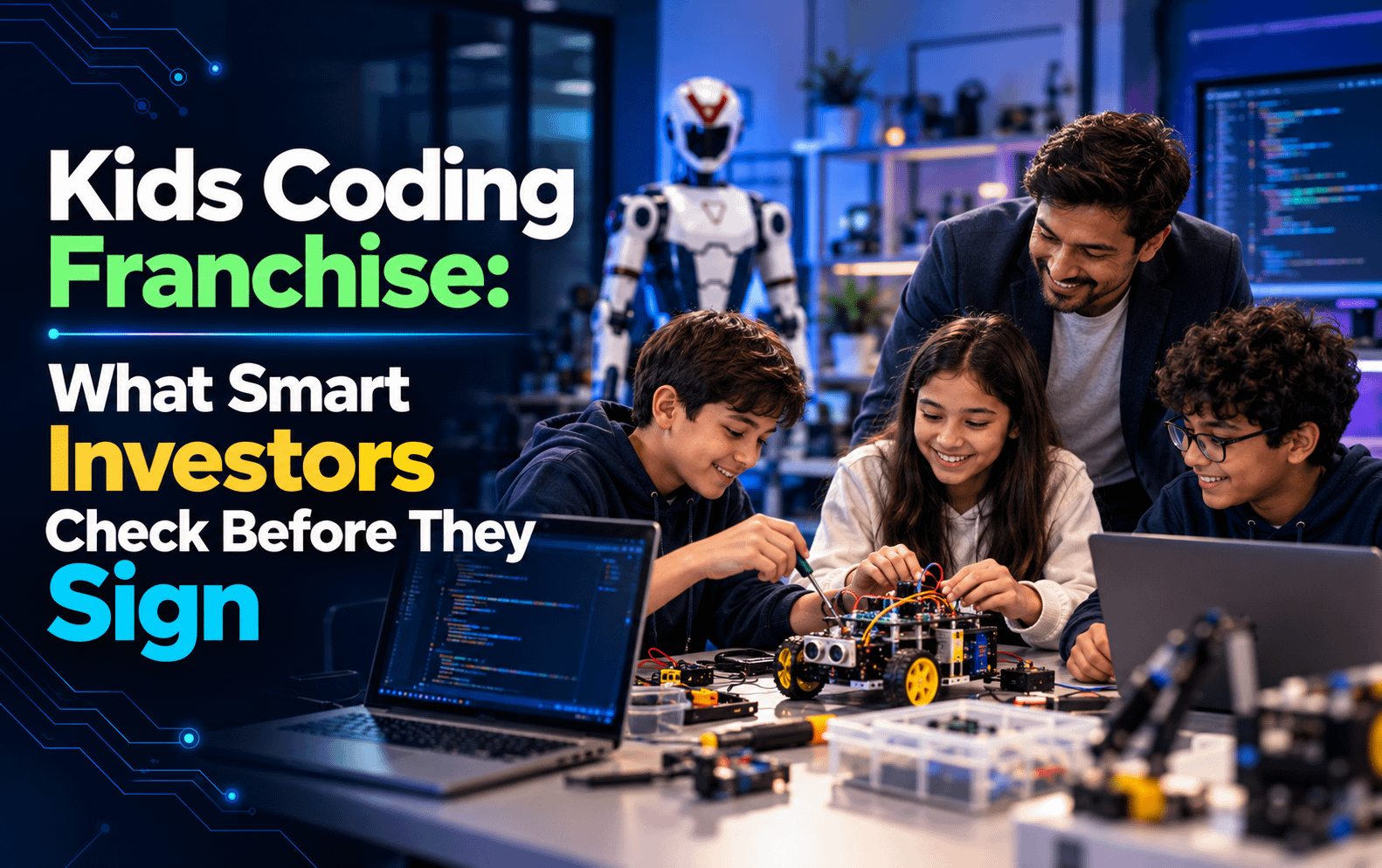
Riding a trend requires more than a buzzword — it requires a real platform behind it. iCode’s Humanoid Robotics curriculum is built around the Unitree R1 EDU, giving franchisees a program with enough genuine capability to back up the marketing.
Quick Spec Snapshot
| Spec | Unitree R1 EDU |
| Weight | 25 kg |
| Degrees of Freedom | Up to 40 |
| Onboard Compute | NVIDIA Jetson Orin, 100 TOPS |
| Sensing | 3D LiDAR + depth cameras |
| Programming | Python / C++ via ROS 2 |
That’s a meaningful difference from franchise models built on generic screen-based coding alone. A physical robot that walks, senses, and responds gives franchisees something concrete to demo at a school fair or a birthday party booking — the kind of moment that turns a curious parent into an enrolled family.
What Makes This a Durable Trend, Not a Fad
Trends fade when the underlying demand was never real to begin with. This one is harder to dismiss that way. The World Economic Forum’s Future of Jobs Report 2025 estimates that 39% of core workplace skills will be disrupted by 2030 — and robotics, automation literacy, and adaptable problem-solving sit near the center of that disruption, not the periphery.
That’s the difference between a fad and a foundation. A fad depends on attention. A foundation depends on the job market actually shifting underneath it — and warehouses, hospitals, and retail floors quietly filling with robots is exactly that kind of shift.
For a franchise investor, that distinction is the whole ballgame. A fad-driven program can fill seats for a season and empty out just as fast once the novelty wears off. A trend rooted in an actual labor-market shift tends to compound instead — this year’s students become next year’s word-of-mouth, and the program’s relevance doesn’t depend on staying trendy, because the underlying skill keeps mattering.
Frequently Asked Questions
Is the humanoid robotics trend just hype, or is it actually driving franchise demand?
It’s showing up in real deployments, not just headlines — from warehouse pilots to consumer robots — and that visibility is exactly what’s pushing parents to look for hands-on robotics programs for their kids sooner rather than later.
Do I need a technical background to run a robotics-focused STEM franchise?
No. iCode’s model is built so franchisees run the business side — location, staffing, enrollment, community relationships — while the curriculum, training, and instructor support handle the technical delivery.
How is a humanoid robotics program different from a standard coding franchise?
A humanoid robot gives students a physical, visible result for their code — movement, sensing, response — which tends to hold attention and word-of-mouth interest better than a screen-only curriculum alone.
What kind of investment does opening an iCode franchise require?
Investment details, territory availability, and startup costs are outlined during the franchise development process, where a consultant walks through the specifics for your target market.
Ready to Explore the Opportunity
Humanoid robotics is moving from research labs into real warehouses, real classrooms, and increasingly, real family budgets. For STEM franchise investors, that’s a rare kind of timing — a trend backed by actual deployment, not just speculation.
iCode’s franchise investment model is built to help owners capture that demand early, with
multiple revenue streams designed to keep a location active year-round.
Franchisees also benefit from protected territories and ongoing support designed around the
qualities of successful franchise owners.
To see common questions from prospective owners, visit the iCode Franchise FAQ, or explore the
iCode Franchise homepage to start the conversation.