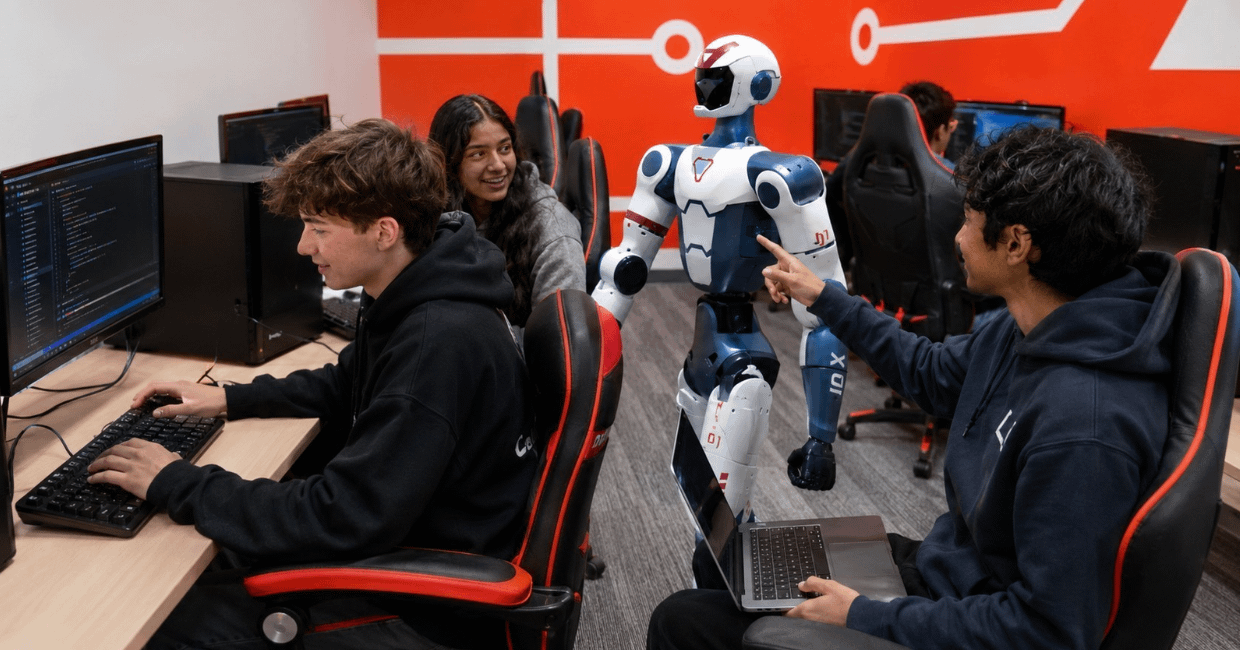
For decades, schools have focused on teaching students how to use computers. But the next major technological shift won’t just involve screens and software—it will involve intelligent machines like humanoid robots working alongside people in the real world.
Humanoid robots are no longer science fiction. Companies around the globe are rapidly developing robots designed to assist in manufacturing, logistics, healthcare, hospitality, retail, education, and even consumer applications in the home. As artificial intelligence continues to advance, these systems are becoming more capable, more adaptable, and more integrated into our everyday lives.
Today’s students won’t just use technology in the future workforce—they’ll collaborate with it.
Learning how to work alongside intelligent robotics systems is already as important as learning how to use computers became in the 1990s
The Workforce Is Changing Faster Than High School Robotics Class
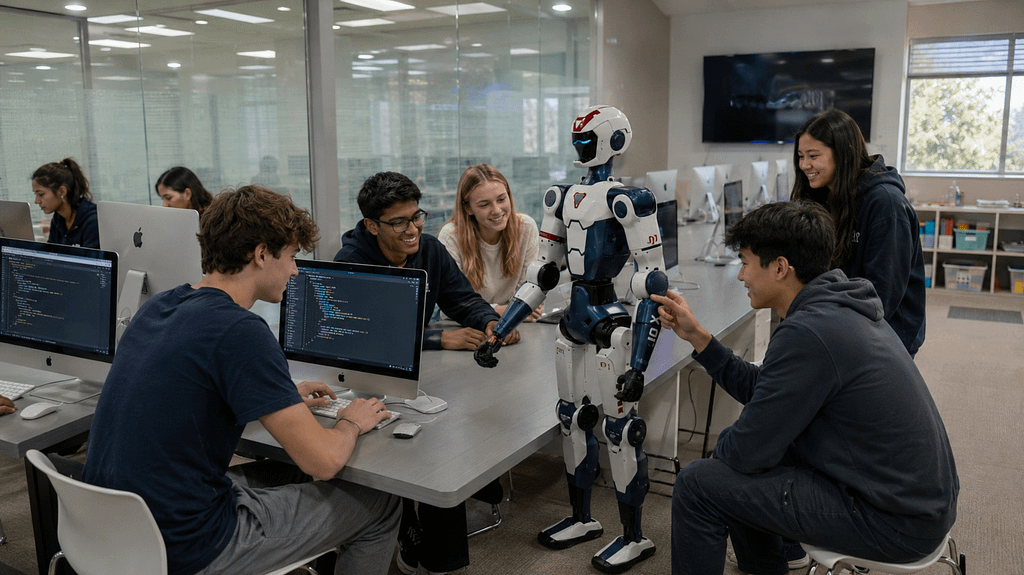
Traditional education systems still focus heavily on memorization and standardized learning models designed for a very different economy. Meanwhile, industries are rapidly adopting automation, AI-driven systems, and robotics to improve efficiency and solve labor shortages.
In the coming years, students entering the workforce may find themselves:
- Supervising robotic systems
- Programming autonomous machines
- Using AI-assisted workflows
- Managing human-robot collaboration environments
- Troubleshooting intelligent devices
- Designing automation solutions
The students who understand how these technologies work—and how to interact with them effectively—will have a significant advantage.
Humanoid Robots Will Reach Our Homes Sooner Than You Think
What many people don’t realize is that humanoid robots are likely much closer to entering consumers’ homes than most expect. Just as personal computers went from expensive business tools to household essentials within a relatively short period of time, advances in artificial intelligence, battery technology, sensors, and robotics manufacturing are rapidly accelerating the development of consumer-focused humanoid assistants.
Major technology and robotics companies around the world are investing billions into systems designed to help with household tasks, companionship, elder care, security, delivery, and everyday convenience. While fully mainstream adoption may still take time, the pace of innovation suggests that today’s students could grow into adulthood in a world where interacting with intelligent robotic systems at home is completely normal.
That also means that by the time today’s high school students enter the workforce, household robots will be so integrated into everyday life that many of them will be working on consumer-focused products and software for home robots.
Humanoid Robots Make STEM Learning Real
One of the biggest challenges in STEM education is helping students connect abstract concepts to real-world applications. High School-Level coding exercises on a screen can teach logic and structure, but robotics brings those ideas to life in a way students can see and experience firsthand.
When students program a robot to move, respond, balance, navigate, or interact with its environment, they begin to understand:
- Sensors and perception systems
- Engineering principles
- Problem-solving
- Human-machine interaction
- Artificial intelligence
- Real-world automation workflows
The learning becomes tangible, engaging, and deeply memorable.
Tomorrow’s Workforce Will Need to Understand AI and the Machine Languages Most Relevant to Robotics
Behind every humanoid robot is a combination of advanced technologies that are already shaping the future of work, including artificial intelligence, computer vision, automation systems, and robotics programming. Modern humanoid platforms are powered by many of the same tools and programming languages used by real-world engineers and AI developers today, including Python, C++, and robotics frameworks like ROS2, which enable machines to perceive, navigate, and interact with their environments. As these technologies become more common across industries, students who gain early exposure to AI and robotics concepts will be better prepared for future careers that involve working alongside intelligent systems rather than simply using traditional software.
Students Need More Than Technical Skills
The future workforce won’t simply reward technical knowledge—it will reward adaptability.
As AI and robotics become more common in the workplace, students will need:
- Creativity
- Communication skills
- Critical thinking
- Ethical decision-making
- Collaboration abilities
- Confidence working with emerging technologies
Learning alongside humanoid robots helps students become comfortable with innovation rather than intimidated by it. It encourages curiosity, experimentation, and thinking beyond traditional boundaries.
Humanoid Robotics Is Expanding Across Industries
The demand for robotics and AI knowledge is growing across nearly every sector:
- Manufacturing
- Healthcare
- Transportation
- Warehousing and logistics
- Hospitality
- Retail
- Defense
- Research
- Entertainment
- Education
Many experts believe that today’s students will graduate into a world where intelligent robotics systems are as common in the workplace as computers are today.
Schools and enrichment programs that expose students to these technologies early are helping prepare them for careers that may not even fully exist yet.
Preparing Students for the Future Starts Now
The goal of modern STEM education shouldn’t simply be teaching students how to use today’s tools. It should be preparing them to adapt to tomorrow’s technologies.
That means exposing students to:
- Automation
- Robotics
- Robotics-related programming languages
- Real-world problem solving
- Human-centered technology design
Humanoid robotics represents an exciting opportunity to inspire students while helping them develop future-ready skills that will become increasingly valuable in the years ahead.
This is all happening right now. The students who prepare to work alongside intelligent machines today will become the innovators, engineers, and leaders who shape tomorrow.